


By Angel Smile Pediatric Dentistry
June, 2026
As parents, it’s natural to wonder if your child’s smile is developing the way it should. Baby teeth seem to fall out overnight, permanent teeth appear one after another, and before you know it, you’re asking yourself whether braces might be needed someday. The truth is, the first orthodontic evaluation for children isn’t only about deciding if braces are necessary. It’s about identifying small concerns before they become more complicated.
Many orthodontic issues begin long before they’re easy to notice. An early evaluation gives parents peace of mind while helping children maintain healthier smiles as they grow. Whether your child has perfectly straight teeth or you have concerns about crowding, spacing, or bite problems, understanding when should a child see an orthodontist can make a meaningful difference.
At Angel Smile Pediatric Dentistry in Wylie, TX, we believe early guidance leads to healthier smiles and more comfortable treatment experiences in the future.
Why Early Orthodontic Evaluations Matter
Most parents associate orthodontics with teenagers wearing braces. However, many bite and jaw development concerns begin much earlier.
According to the American Association of Orthodontists (AAO), children should receive their first orthodontic evaluation by age seven. At this age, enough permanent teeth have erupted for a specialist to evaluate jaw growth and tooth alignment.
An early visit doesn’t necessarily mean treatment starts immediately. In fact, research shows that only about 15–20% of children evaluated at age seven require early intervention, while most simply benefit from periodic monitoring until the appropriate treatment stage.
Early evaluations can identify:
- Crowded teeth
- Crossbites
- Overbites and underbites
- Jaw growth differences
- Extra or missing permanent teeth
- Thumb-sucking effects
- Speech or chewing concerns
Finding these issues early often allows for simpler, less invasive treatment later.
When Should a Child See an Orthodontist?
Many parents ask, when should a child see an orthodontist if everything appears normal?
The answer is straightforward: around age seven, even if no obvious problems exist.
During this stage:
- Permanent front teeth are emerging.
- First permanent molars have erupted.
- Jaw growth patterns become easier to evaluate.
- Bite relationships can be assessed accurately.
An orthodontic consultation for kids serves as a preventive evaluation rather than a commitment to braces.
If everything looks healthy, your child may simply return every six to twelve months for observation.
Signs Your Child May Need an Earlier Orthodontic Checkup
Although age seven is the general recommendation, some children benefit from seeing a pediatric orthodontist even earlier.
Watch for these signs:
Difficulty Biting or Chewing
Children who avoid certain foods or complain about discomfort while eating may have bite alignment concerns.
Early or Late Loss of Baby Teeth
Baby teeth guide permanent teeth into place. Losing them too early—or much later than expected—can affect tooth alignment.
Crowded or Crooked Teeth
Visible crowding often indicates that there may not be enough room for permanent teeth.
Mouth Breathing
Persistent mouth breathing may influence jaw development and facial growth.
Thumb or Finger Sucking Beyond Age Four
Extended sucking habits can change how the upper jaw and teeth develop.
Jaw Clicking or Shifting
A jaw that shifts noticeably while opening or closing deserves professional evaluation.
If you notice any of these concerns, scheduling a child orthodontic checkup sooner rather than later is recommended.
What Happens During the First Orthodontic Evaluation for Children?
Many parents worry their child will leave with braces after the first appointment.
Fortunately, that’s rarely the case.
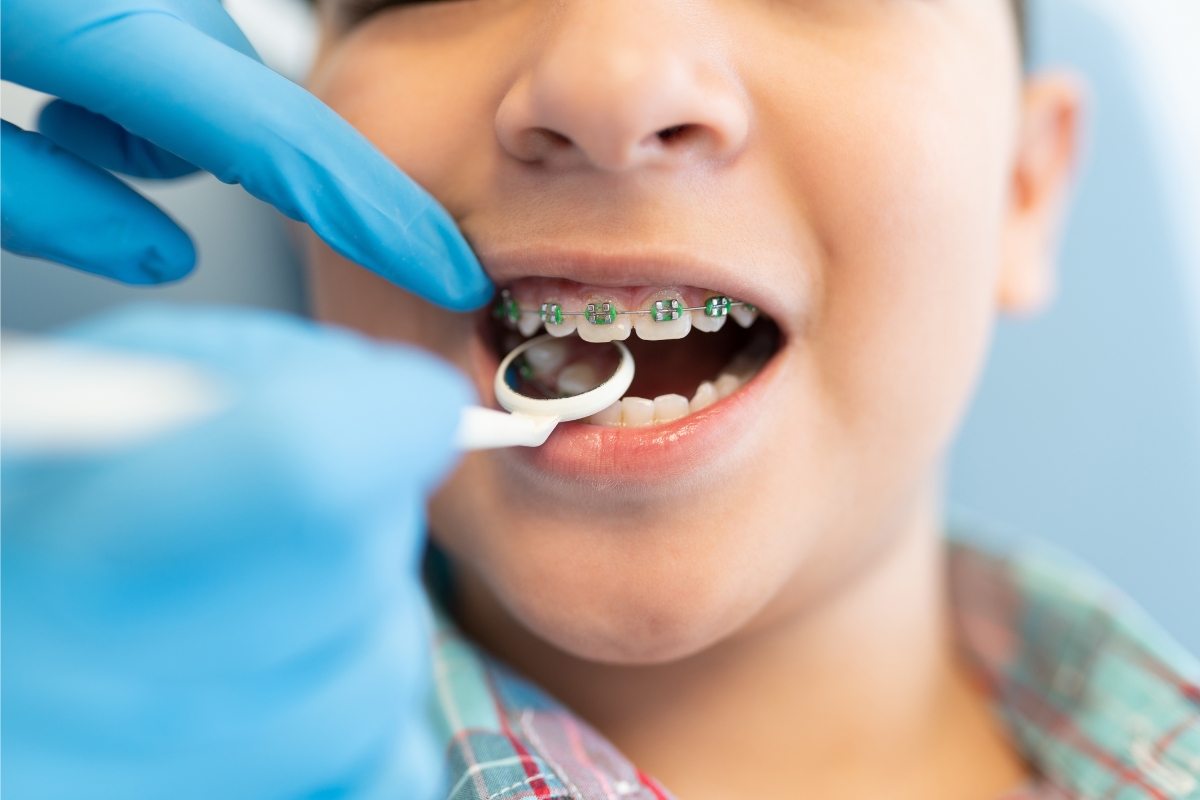
A typical first orthodontic evaluation for children includes:
Reviewing Dental and Medical History
The dentist asks about oral habits, family history, injuries, and overall dental health.
Examining Tooth Development
The provider evaluates:
- Tooth eruption
- Bite alignment
- Jaw growth
- Spacing
- Crowding
Digital X-Rays and Images
Modern imaging helps identify:
- Teeth developing below the gums
- Missing teeth
- Extra teeth
- Jaw positioning
Discussing Future Growth
Parents receive guidance about:
- Whether treatment is needed now
- Whether observation is appropriate
- Expected timing for future orthodontic care
Most appointments take less than an hour.
Understanding the Right Age for Orthodontic Treatment
One common misconception is that early evaluation automatically means early braces.
That’s not true.
The age for orthodontic treatment depends entirely on each child’s development.
Generally:
| Age | Purpose |
|---|---|
| 6–7 years | Initial orthodontic evaluation |
| 7–10 years | Monitoring jaw growth or early intervention if needed |
| 11–14 years | Most comprehensive orthodontic treatment begins |
Many children simply continue routine dental visits until the timing is ideal.
The Importance of Early Dental Screening
Routine early dental screening provides benefits beyond cavity prevention.
These visits allow dental professionals to monitor:
- Jaw growth
- Tooth eruption patterns
- Bite development
- Oral habits
- Facial symmetry
Studies published by pediatric dental organizations consistently show that identifying orthodontic concerns early may reduce treatment complexity and, in some cases, shorten treatment duration later.
Preventive monitoring also gives parents time to understand future treatment options without feeling rushed.
How a Pediatric Orthodontist Works with Your Child’s Dentist
Your child’s general pediatric dentist and pediatric orthodontist often work together.
Routine dental visits help monitor:
- Oral hygiene
- Tooth eruption
- Gum health
- Bite changes
If concerns develop, your dentist may recommend an orthodontic consultation for kids before problems become more significant.
Families searching for a pediatric dentist near me often appreciate practices that coordinate preventive dental care with orthodontic evaluations, making long-term smile development easier to manage.
Why Families in Wylie, TX Choose Early Orthodontic Evaluations
Children throughout Wylie, TX, grow and develop at different rates, which is why individualized care is so important.
An early orthodontic evaluation allows local families to:
- Understand their child’s unique smile development.
- Monitor changes during growth.
- Address problems before they become more difficult.
- Plan future treatment with confidence.
At Angel Smile Pediatric Dentistry, our team focuses on comfortable, child-friendly visits that help parents make informed decisions without unnecessary treatment.
Whether you’re visiting for a routine dental exam or searching for a pediatric dentist near me, early orthodontic guidance can become an important part of your child’s lifelong oral health.
Final Thoughts
Every child’s smile develops differently, which is why there isn’t a one-size-fits-all approach to orthodontic care. Scheduling the first orthodontic evaluation for children around age seven allows dental professionals to monitor healthy growth, identify concerns early, and recommend treatment only when it’s truly beneficial.
If you’ve been wondering when should a child see an orthodontist, an early evaluation provides valuable answers without committing your child to immediate treatment. For families in Wylie, TX, proactive orthodontic care can support healthier smiles and greater confidence as children grow.
Schedule an Appointment
If your child is approaching age seven or you’ve noticed changes in their bite or tooth alignment, the team at Angel Smile Pediatric Dentistry is here to help. Schedule an appointment to give your child a comfortable, comprehensive orthodontic evaluation and personalized guidance for a healthy, confident smile.
Frequently Asked Questions
Does every child need braces after the first orthodontic evaluation?
No. Most children simply need regular observation until the right time for treatment.
Is age seven too young for an orthodontic evaluation?
Not at all. Age seven is recommended because permanent teeth and jaw growth can be properly evaluated.
Can baby teeth affect orthodontic treatment?
Yes. Baby teeth guide permanent teeth into position, making early monitoring valuable.
What if my child has straight teeth?
Even straight teeth can hide bite or jaw alignment concerns that aren’t visible without a professional examination.
How often should children have orthodontic evaluations?
If no treatment is needed, your provider may recommend follow-up evaluations every six to twelve months during growth.
Related Articles