


By Angel Smile Pediatric Dentistry
September, 2026
Watching your child lose baby teeth can be exciting. You expect to see a new permanent tooth appear soon after, so it can be concerning when a tooth seems to be taking much longer than expected. In some cases, the tooth may be stuck beneath the gum instead of erupting normally. This is known as an impacted tooth.
Impacted teeth in children are not always painful or easy to spot. A child may feel completely fine while a permanent tooth remains trapped beneath the gum or bone. That is why regular dental visits are helpful during the years when baby teeth are being replaced by permanent ones.
At Angel Smile Pediatric Dentistry in Wylie, TX, monitoring how your child’s teeth develop can help identify eruption concerns and determine whether treatment is needed.
What Is an Impacted Tooth?
A tooth is called impacted when it cannot come into the mouth normally. Instead, it may remain partly or completely underneath the gum.
This can happen with different teeth, but permanent canine teeth are commonly affected. These teeth have a longer path to travel before reaching their final position, which can make them more susceptible to becoming blocked.
Not every delayed tooth is impacted. Children develop at different rates, so a tooth that appears later than expected does not necessarily indicate a problem. A dental examination and, when appropriate, an X-ray can provide a clearer picture.
What Causes Teeth to Become Impacted?
There is no single cause in every child. Several factors can interfere with normal eruption.
Common causes include:
- Not having enough room for the permanent tooth
- Crowded teeth
- A baby tooth that remains in place too long
- Losing a baby tooth earlier than expected
- An extra tooth blocking the eruption path
- A permanent tooth developing at an unusual angle
- Certain developmental or inherited factors
Sometimes the reason is obvious, while other cases are simply related to how the child’s teeth and jaw are developing.
Signs Parents Should Watch For
One of the tricky things about impacted teeth in kids is that they may not cause any symptoms. A dentist may find the problem during a routine visit before a parent or child notices anything unusual.
Possible signs include:
- A permanent tooth that does not appear when expected
- A baby tooth that stays in place for an unusually long time
- Swelling or tenderness around the gums
- Crowding or shifting of nearby teeth
- Discomfort while chewing
- Red or irritated gum tissue
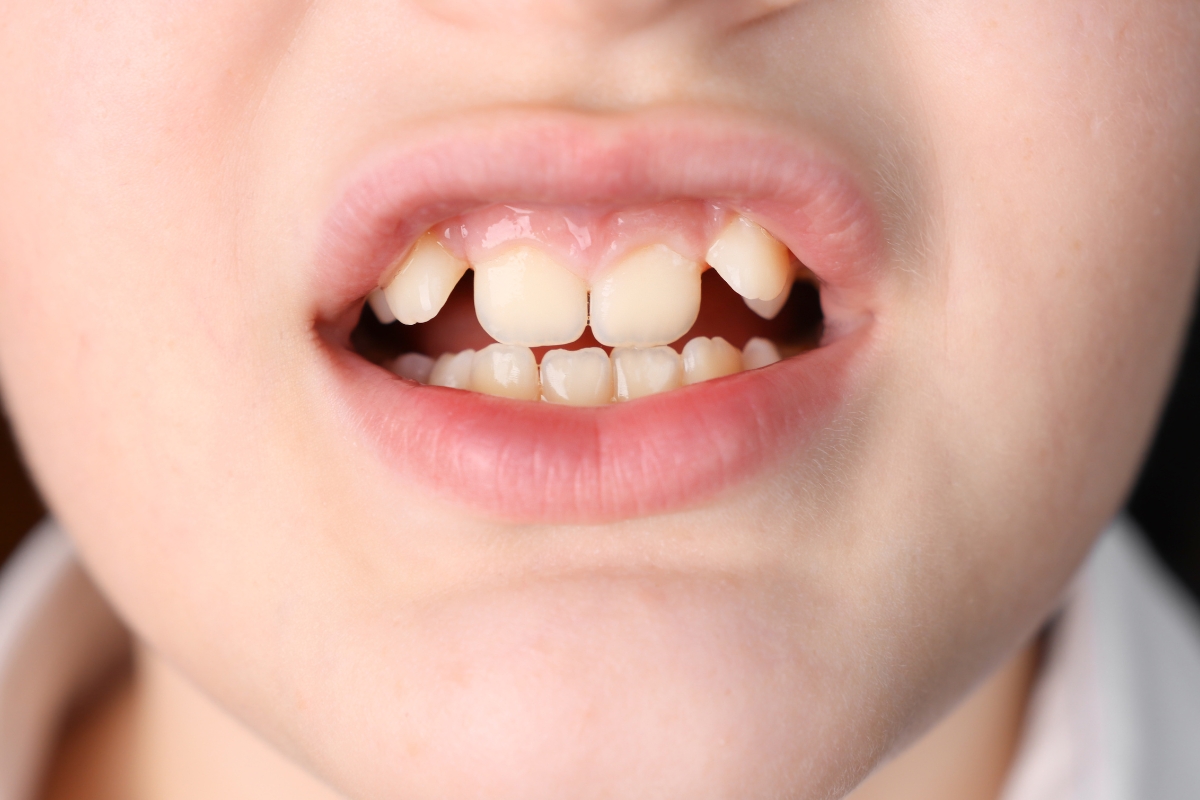
- A visible difference between the two sides of the smile
Pain is not necessary for a tooth to be impacted. If your child’s tooth development seems unusual, it is worth bringing the concern up during a dental visit.
How Are Impacted Teeth Diagnosed?
The process usually begins with a dental examination. The dentist will look at the child’s teeth and gums, check the bite, and consider which baby and permanent teeth have already erupted.
Why Dental X-Rays May Be Needed
An impacted tooth cannot always be seen during a regular examination. Dental imaging can show where the tooth is located and whether something is blocking its path.
An X-ray may help the dentist determine:
- The tooth’s position
- Its angle and direction of growth
- Whether another tooth is blocking it
- How much room is available
- Its relationship to nearby teeth
This information is useful when deciding whether to monitor the tooth or consider treatment.
The American Dental Association recognizes dental X-rays as an important diagnostic tool when additional information is needed beyond a clinical examination.
How Are Impacted Teeth Treated in Children?
Treatment depends on several factors, including the child’s age, the tooth involved, its position, and whether it may still erupt naturally. There is no one-size-fits-all approach.
Watching the Tooth
If the tooth is developing in a favorable position, the dentist may recommend monitoring it. Regular visits can show whether it begins moving into place on its own.
For some children, observation is all that is needed.
Making Room for the Tooth
Crowding can prevent a permanent tooth from reaching the surface. In these cases, orthodontic treatment may be used to create additional space.
Depending on the child’s needs, this could involve an orthodontic appliance or braces. Once sufficient room is available, the tooth may have a better chance of erupting normally.
Removing a Baby Tooth
A baby tooth that has not fallen out can sometimes interfere with a permanent tooth. If it is contributing to the problem, removing it at the appropriate time may help the permanent tooth follow a more natural path.
This option is not appropriate for every child, so the tooth’s position and development need to be evaluated first.
Guiding the Impacted Tooth
When a permanent tooth is unlikely to erupt without assistance, a pediatric dentist may work with an orthodontist or other dental specialist.
In selected cases, the tooth can be gently exposed and then guided into position with orthodontic treatment. Preserving the natural tooth may be possible when its position and condition make this approach practical.
Removing the Tooth
Extraction may be considered when an impacted tooth cannot reasonably be moved into a healthy position or is creating problems for surrounding teeth.
The decision should be based on the child’s individual dental development rather than simply the fact that the tooth is impacted.
Why Early Evaluation Can Help
Parents should not assume that a late-erupting tooth means something is seriously wrong. However, persistent delays deserve attention.
A timely dental evaluation for impacted teeth can show whether the tooth is simply developing slowly or whether something is preventing it from erupting. Identifying the situation early may also give the dental team more options for guiding the tooth.
If you’re searching for a pediatric dentist near me around Wylie, TX, look for a practice that regularly monitors children’s developing teeth and can explain treatment choices in a way both you and your child can understand.
What Can Parents Do?
There is no guaranteed way to prevent an impacted tooth, but parents can stay involved in their child’s dental development.
Try to:
- Keep routine dental appointments.
- Tell the dentist if a baby tooth remains unusually long.
- Mention when one permanent tooth appears but its matching tooth does not.
- Encourage daily brushing and flossing.
- Follow recommendations for dental imaging.
- Ask about orthodontic evaluation when crowding is present.
- Follow through with referrals when a specialist is recommended.
These simple steps can make it easier to notice changes before they become more difficult to manage.
Supporting Your Child’s Growing Smile
An impacted tooth can sound alarming when you first hear the term, but it does not automatically mean your child will need extensive treatment. Some teeth simply need time and observation, while others may benefit from creating space or carefully guiding the tooth into position.
The most useful thing parents can do is stay attentive to changes in their child’s smile and keep regular dental appointments. With appropriate monitoring and individualized impacted tooth treatment for children when needed, many eruption problems can be addressed while the mouth is still developing.
Families in Wylie, TX, can talk with Angel Smile Pediatric Dentistry about concerns involving delayed eruption, crowding, or a tooth that appears to be stuck beneath the gums.
Frequently Asked Questions
Can an impacted tooth hurt?
Sometimes, but not always. An impacted tooth may cause tenderness, swelling, or discomfort, but many children have no symptoms at all.
Are impacted permanent teeth always removed?
No. Depending on the tooth’s position, it may be monitored or guided into place. Extraction is considered only when preserving the tooth is not a reasonable option.
Which teeth are most likely to become impacted?
Permanent canine teeth are commonly affected, although other teeth can also become trapped beneath the gums.
Can an impacted tooth affect other teeth?
It can. Depending on its position, an impacted tooth may interfere with neighboring teeth or contribute to crowding. Imaging can help identify potential concerns.
When should I have my child’s tooth checked?
If a permanent tooth seems significantly delayed, a baby tooth remains longer than expected, or the teeth appear crowded or unusual, mention it to your child’s dentist. An examination can determine whether further evaluation is necessary.